Sunday, February 26, 2012

GUIDE TO INSTINCTIVE ART TUTORIALS


There are six forms of SOULSPEAK instinctive art:


1) Spontaneous Spoken Poetry


2) Spontaneous Storytelling


3) Spontaneous Dance/Mime


4) Spontaneous Music


5) Dreamstory Videos


6) Spontaneous Collage


All of them except Spontaneous Music/Collage and Dreamstory videos can be done without any equipment except the human body.


The most important first step in all these forms is learning how to speak. It is the foundation for learning the other instinctive forms. Basically what has to mastered is the ability to "let go" of conscious control so the ceative unconscious can direct you.


1. Spontaneous Spoken/Sung Poetry (Speaking)


There are several free video/text tutorials that can assist you in awakening this natural way of expression. Sung speakings differ from spoken speakings only in that they are sung out in an instinctive, spontaneous musical way that comes intuitively and with no effort.


If you're doing it right, it will sound much like the simple sing-song children use without thinking.


Once speaking is mastered, you can proceed easily to the other art forms, because you will have learned what it feels like to "let go" of conscious control so the creative unconscious can direct you.


Here the suggested tutorials, in the order you should approach them. The video below should be sufficient if you are primarily interested in art forms other than speaking.


SPEAKING VIDEO TUTORIAL (on player below)


OTHER ADVANCED SPEAKING TUTORIALS:

1. PDF: SOULSPEAK: The Outward Journey of the Soul. Chapters 1, 2, 3.


2. How to Create Better, More Moving Poems (SPEAKINGS).


2. Spontaneous Storytelling


This art is something that will happen or not happen once you have learned how to speak. It comes from a less unconscious level than speaking, and will occur naturally if you have a propensity for storytelling in your everyday life.


For more information on forming them, I suggest you listen to the episode (RAY BBQ) on my web radio show on Spontaneous Storytelling on the player below.


Here are links to mp3 downloads of 2 other spontaneous stories: FRANK BBQ and ROBERT BBQ.


The player below has an animated video of the spontaneous story called RAY BBQ.


3. Spontaneous Dance/Mime


This art form, first developed as SOULMOVES by Scylla, can be approached in two ways:


1. By physically miming a speaking that you have previously created for the purpose of your spontaneous dance/mime.


The speaking should be recorded with the music you intend to use for your spontaneous dance/mime.


Let your movements be an instinctive, unthinking reaction to the action/emotional progression of the speaking. Don't slavishly imitate the speaking.


2. By physically acting out a preexisting speaking created by some one else. Again mime/dance should not be a slavish imitation of the speaking, but an instinctual reaction to the speaking as it progresses.


The Player below has several examples of this. One of the examples in the Player below, The Soul is an Actor, uses 2 spontaneous dancers, one in front of the projection screen and one in back of it.


Feel free to use any of these speakings on the Soundclick Player.


There are 2 additional aides that may assist the dancer in easily accessing the unconscious:


1) Wearing a mask. It increases the mystery of the acting-out especially if you are dancing in front of a mirror.


2) Complete darkness. This is an excellent way to learn to trust the unconscious.


The player below shows samples of the various approaches.


4. Spontaneous Music


This is only possible using Apple’s Garage Band which is really a synthesizer for Dummies. I began to use it to create simple, slow music that I could use to help pull speakings out of me.


Let me add that I have no knowledge of music and am tone deaf, yet years of working with accomplished composers has greatly increased my instinctive ability to recognize very good music. Music with soul.


This guides me in my use of Garage Band, which I never approach with a conscious intent, but a hunger for a dimly sensed sound/feeling that is roaming through my body, usually as a precursor to an unknown speaking also rising up to be born.


I do it all by feel until I get the sound that feels right. I then create an MP3 of the tune and then I wait for the speaking to knock on the door.


Here is a Soundclick Player with some of my spontaneous music. It has been recorded at around 60 bpm, the speed of heartbeat. It is the speed most conducive to speaking.


Feel free to download it and use it for any instinctive art form that requires music.


5. Dreamstory Videos


The creation of Dreamstory videos requires the aid of PCs, which allow the instinctive assemblage of audio and video with very little conscious intervention. Firstly, it requires a PC with video editing software.


Microsoft Movie Maker, Apple I-Movie and Pinnacle are three editors I use, Movie Maker being the simplest and most limited and Pinnacle being the most complex and fully featured.


Dreamstory creation begins by using rough photos or video clips as a catalyst for creating the speaking soundtrack that will be used in the final video.


Every stage, starting with the rough clips, is done instinctively. A complete discussion of this and how the final Dreamstory video is also instinctively assembled can be found on the Dreamstory Site.


The Player below contains a selection of
Dreamstories


6. Spontaneous Collage.

I have inserted 5 collages of the kind you can make using this technique.


Sizzors, paste and a large piece of paper are the only technical requirements. This is the same as everyday collage. Where it differs is how you approach the collage. Don't preconceive what the collage will look like.


1. Gather a very large number of magazines/pictures. Go thru them at a leisurely pace. Playing SOULSPEAK music will help your unconscious assist you. When you see a picture that PULLS you, tear it out. Don't ask yourself why it pulls you. No cutting at this stage. Continue, WITHOUT THINKING, until you tire; when you do tire, quit for the day.


EXAMPLE 1


2.When the spirit moves you , take out the torn-out pictures and leaf thru them. Keep only those that continue to PULL you. Go back to step 1.


EXAMPLE 2

3. When you have about 30 torn out pictures, begin to move them around until their position in relation to the others satisfies you. Let your feelings guide you, not logic.Take your time. Be dreamy.

EXAMPLE 3

4. Let your instincts tell you how to cut each picture so it blends into the surrounding pictures.

For example it would be logical to place a picture of a wife next to a picture of a husband. That may be the feeling way too. But it may not. Maybe your feelings tell you to place a wall between them. Do it.

Take your time. Don't cut until you are sure.


EXAMPLE 4

5. Let the result sit for a while. Keep making minor modifications until a bell rings in your head. Paste everything into place.


EXAMPLE 5


NOTE.
You can use the collage instead of seed words to create a speaking if you wish. Start out the same way but let your eye glide from image to image instead of gliding from seed word to seed word. You'd be amazed.


Monday, January 11, 2010

CREATING BETTER, MORE MOVING POEMS (SPEAKINGS)


IF YOU'RE NEW
TO SOULSPEAK,
YOU MAY WANT TO
CHECK OUT THE

GUIDE TO SOULSPEAK


IF NOT, ON TO CREATING BETTER, MORE MOVING POEMS


Poet Justin Spring / SOULSPEAK House


Before going any further, play this short animation of the essence of the SOULSPEAK method for accessing the creative unconscious.

If it intrigues you, you may want to go on further. Or you may have all you'll ever need.

The important thing is to try it, not try to figure it out..

You're going to be surprised. The method is simple, but radical.

It's meant to shut down your thinking mind and beckon the Muse.

And it will, if you let it. Believe me.


If you want to know more about Poet Justin Spring, click here


CREATING BETTER, MORE MOVING POEMS
THE INNER WAY

My many years of experience as a prizewinning, innovative poet have led me to believe that anyone can learn to create very good poems, even those who have no knowledge of poetry.


That is a strong statement, yet thousands have used my methods to do just that. I am not going to teach you in the usual way, however, which usually involves moving words around in some manner.


Hit play on the YOUTUBE player below to start. You'll see a video and hear t soundtrack made of the kind of poems I'm talking about, the most basic poems there are, and one that takes no conscious effort to form: the narrative ( story) form.


I and some other poets spoke these poems out spontaneously using the SOULSPEAK method, but we could have written them as well. But speaking makes a better video, which is why I chose that way of making the poems for these videos.


By the way, I call these video poems, DREAMSTORIES ..


There is music on the soundtrack because in the SOULSPEAK method, it aids composition, just as it was aided the composition 0f preliterate (oral) poetry-- the very first form that poetry took and upon which SOULSPEAK is modeled.

What you are hearing is a contemporary version of the kind of oral poetry our preliterate ancestors created: narrative (story) poems. I call my contemporary version SOULSPEAK.

You may not be aware of it, but narrative (story) poems can be spontaneously created without forethought of any kind. None.


That is because the formation of stories is automatic for humans. It simply occurs. It is the form of our gossip and the form of our dreams. It is also the oldest and most primal form of poetry.


If you are destined to become a true poet, you will soon recognize the value of what I am saying because the path of a poet is a spiritual path, not a logical path.


The first thing you must do is open yourself to the fact that poetry in its essential, primal form is already within us, waiting to be awakened.


It is not a form of literature bound by a set of rules, but a living part of us with its own way of realizing itself that does not depend upon the act of writing nor the conscious mind and its manipulations.


Before I go any further though, I'm going to give you a few moments for that last statement to sink in and give you what you've been looking for.


Some rules for making better poems.


These rules may not be what you've been expecting, however, because they are not gimmicks or techniques, but rules to live by when a poem begins to come to you.

Here they are, but without explanation. That will come later.:


Rule 1: You must never try to consciously create a poem.


Rule 2. NEVER, NEVER change any words or phrases that come to you forcibly during the ecstatic state that accompanies the poem's arrival.


Rule 3. In attempting to retrieve the parts of the poem you missed during the ecstatic state, you must ALWAYS start with the opening phrases given you by the Muse.


Rule 4. Since the Muse will come when she wants to, and only when she wants to, the only thing you can really do attract the Muse is widen the path that the Muse will take. Make it easier for her. Make it a highway.


It may be news to you, but poems existed for tens of thousands of years before literature even existed. It existed in a much purer form, a spontaneous, oral form that realized itself with very little (if any) conscious intervention.


And here's the good news: we have not lost that capability. It still exists within us at an unconscious level, a level that all great poets are aware of and have access to.


What that capability offers us is a way of making better poems by allowing our poems to realize themselves in a more complete, more immediate and less conscious way.

If we forget all the techniques and forms that came into being when writing was invented (and poetry became a written act ) and we look at preliterate times, we can see poetry in its purest state.


You might say that preliterate poetry is the Galapagos of poetry.


In preliterate times, poetry was spontaneously spoken from the unconscious. At a very early stage of preliterate culture, it was the initial form of prayer. It was a praise act.

The Muse was invoked and the Muse then spoke through the poet to others and to the Gods.


That statement by the way is a very accurate paraphrase of how Homer, the greatest of preliterate poets, described the nature of his poetry:

.

“You will be sorry in time to come if you kill the singer of songs. I sing to gods and to human people, and I am taught by myself, but the god has inspired me in song-ways of every kind. I am one who can sing before you as to a god.”


Well, what does all that have to do with writing better poems?


For openers, it tells us that poetry in its initial, purest state:


1) was devoid of technique and forms as we know them today.


2) was the way the unconscious mind (the Muse) communicated, or became one, with the conscious mind. In other words, poetry was the way preliterate man became Godlike.

It is no different for us today.


What that early poetry shows us is that technique and forms (as we know them today) are secondary to the creation of a poem.


They are after effects if you will, something to be applied after the poem enters the world.


Early preliterate poetry also shows us what the essential function of a poem is to allow us to become Godlike.


That is what the ecstatic state that accompanies the creation of a true poem is all about.


Finally, it shows us that since technique is secondary, the only thing we should be concentrating on is achieving that ecstatic state and allowing it to complete itself, because that is the only way true poems are born.


In other words, all the technique and forms in the world can't put Humpty Dumpty together again if we don't allow that ecstatic state to enter us and complete itself.


If this kind of talk puzzles or frightens you, you may not be cut out to be a poet, but if it intrigues you, you should go further.


Here are some statements you should think about:


A true poem only occurs when the unconscious rises to consciousness in the form of a story.


Poetry is a special form of story. It is a story initiated by the unconscious mind, and because of that it is always rhythmic and metaphoric, because that is the way the unconscious communicates when we are awake.


Making better poems then is not really a matter of mastering forms, such as sonnets or rhyming, or having a large vocabulary, or even having a good knowledge of the poetry of the past.


All those things may be useful at some stage, but in the end, creating better poems really depends upon how easily, and completely the poem can rise from the unconscious to your conscious mind.


This is because the Muse, or the poetic unconscious, is the source of all true poems. All the technique and vocabulary in the world are useless if the poem is initiated by the conscious mind. What you will get then is poetic musing , or thoughts, but no gold ring, no true poem.


The player below shows several videos of SOULSPEAK poems being spontaneously created. Some are single speaker, some are dual speaker
(antiphonal).


All were created using the SOULSPEAK method, in which music is used as an aid to accessing the Muse, and is an integral part of the composition of the poem.


Great poets always wait for their poems to arrive unbidden from the unconscious.


They know if they try to consciously form a poem, a true poem will never arrive.

Great poets also have a "highway" between their conscious and unconscious minds. Lesser poets have a wandering, broken path between the two.


With all that said, here are those rules I gave you earlier, but with some commentary that may help you understand them better..


Rule 1: you must never try to consciously create a poem.

You can beckon the Muse through a series of methods, such as the SOULSPEAK method, but it is never a sure thing.

In the end, you must always wait for the poem to rise from the unconscious mind.


When that begins to happen, the feeling is unmistakable, because it is the onset of the ecstatic state that you experience as the poem begins to become fully conscious.


When that state occurs, your task as a poet is to get the words and rhythm written down as completely and as accurately as possible.


You have to feel your way towards doing that. It is rare that you can consciously capture the entire poem and write it down. Usually, you get the beginning phrases and ending with the rest being a blur of sorts.


Which leads me to Rule 2. NEVER, NEVER change any words or phrases that have come to you forcibly during that ecstatic state.


They are the what the Muse has given you and they are true pieces of the poem.They are gold.


They are also the key to retrieving, or rediscovering, the parts of the poem you didn't get down during the ecstatic state.

Which leads me to Rule 3. In attempting to retrieve the missing parts of the poem, ALWAYS start with the opening phrases given you by the Muse.


The trick is to turn your conscious mind off as you read the opening phrases and see what happens. This is a courtship of sorts and you emotions must be appropriate to that fact.


The Muse may appear or she may not. You have no say in the matter. If she doesn't appear, go do something else for a while. The time isn't right, or you were trying to hard, or you hadn't completely surrendered to the will of the Muse.


The Muse likes a playful, quiet, open, respectful mind. Not an aggressive, demanding, critical mind.

Believe me, it is a kind of courtship and it may go on for days or weeks or years.


You'll know when to call it quits, just as you do in an actual courtship.


In any case, never force the lines you can't retrieve. Face up to the fact that sometimes you win, and sometimes you lose.


So here's Rule 4. Since The Muse will come when she wants to, and only when she wants to, the only thing you can do to help is widen the path that the Muse will take. Make it easier for her. Make it a highway.


If you are able to widen whatever path exists within you, better poems will eventually occur as a matter of course.


The SOULSPEAK method of quieting the conscious mind will help you do that.


The SOULSPEAK method will also help you beckon the Muse to come into consciousness.

Whether the Muse will arrive or not is anyone's guess, but the less conscious you become, the better chance you have of that happening.

You'll know when it has happened because the poem will start to rise up within you towards the ecstatic state that always accompanies a poem's arrival.


The most important thing you can do to insure the success of the SOULSPEAK method is turn off your critical conscious mind and forget everything you know about poetry. Everything.

Then surrender completely to where the SOULSPEAK method will take you, which is to a state where the narrative poem will rise up and form itself completely of its own accord.


You might say the SOULSPEAK method is a "no brainer."


Hit play on the YOUTUBE player below to start. It contains a few easy lessons on how to create your own poems using the SOULSPEAK method..


In these lessons I speak the poems out, but I could have written them as well. I find that speaking them out produces a more surprising and more moving poem. The choice is yours, but you should try speaking them out even if it does seem unusual at first..


What makes a story a poem is that it is a story initiated by the unconscious mind. Such a story is automatically rhythmic and metaphoric because that is the nature of stories initiated by the unconscious since the beginning of time.


You'll notice that the diction is clear and speech-like and easy to listen to. Yet it has a slight rhythm. This is also a characteristic of a true oral poem.


But, again, you can write this type of poem as well. In the SOULSPEAK method, the narrative poem forms itself in your mind automatically. Speaking or writing it is your choice.


What you will gain from the SOULSPEAK method is better and more complete access to the Muse, which is all any poet can ask. The more you do it, the deeper and wider the path.


After a while, you can return to your previous manner of creating poetry.


Your poetry from that point on will benefit (1) from the widened path to the Muse and (2) your increased familiarity with what it really feels like when the Muse is "delivering the goods."


The ability to distinguish that feeling from all others is critical to your continued success.


CLICK ON LAUGHING GIRL PICTURE TO RETURN TO GUIDE TO TUTORIALS


FOR TEACHERS


If you are a teacher working with mainstream students, SOULSPEAK is a way to bring them easily into the world of poetry. Basically, SOULSPEAK allows students to experience what poets actually feel when a poem comes to them. This way, they'll understand poetry from the inside out, which is the way they'll really learn to appreciate poetry.

Here is a link to download a free instruction book on SOULSPEAK.


SOULSPEAK POEMS


If you want to see children creating poems using the SOULSPEAK method, click on the player below:


It is a DVD of an Inter-generational Program we ran in conjunction with Senior Friendship Center and Girls Inc to assist young girls and elderly women in bonding.


SPECIAL USES OF SOULSPEAK


SOULSPEAK

HEALING PROGRAMS


Here are two preview videos of special SOULSPEAK Healing Programs we offer live and via internet and DVD


1. Grief Support Program

(developed in conjunction with Hospice)


Mother Child Bonding

(developed in conjunction with YMCA Character House)


THERAPEUTIC SOULSPEAK PROGRAMS


If you are a therapist or teacher working with at-risk students or a therapist working with adults in therapy, Therapeutic SOULSPEAK has proven to be an effective way of helping people of all ages express themselves from extremely deep levels in a healing, cathartic way.


Here are some links to descriptions and recordings of Therapeutic SOULSPEAK Programs for:


AT-RISK CHILDREN


ADULTS IN THERAPY


Here is a link to free instruction books and a general description of Therapeutic SOULSPEAK.


Therapeutic SOULSPEAK is a proven, documented program with a very high success rate. Since 1994, we have worked with at-risk children and children and adults in therapy of almost every description, ranging from pregnant teens to children with learning disabilities to adult multiple personalities.


Extensive References and Statistics are available in the Adobe PDF of the White Paper on Therapeutic SOULSPEAK that was published in the Journal of Poetry Therapy. You can download a free copy one by clicking here.


Therapeutic SOULSPEAK Programs are available for both at-risk children and adults in therapy. Over 3000 children and adults have participated in SOULSPEAK programs.


Contact Justin Spring at the email in the Profile (soulspeakspring@gmail.com) for more information


These are some of the foundations who have supported our work:


Bates Foundation; Beattie Foundation; Community Foundation of Sarasota County; Florida Department of Juvenile Justice; Kates Foundation; Knight Foundation; Bank of America; Sarasota County Foundation; Selby Foundation; Selby Partnership; Southwest Florida Community Foundation; State of Florida Interdisciplinary; State of Florida Arts in Education; VSA Arts; Woman’s Exchange; Gulf Coast Community Foundation.


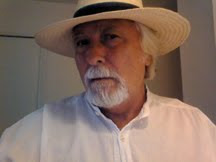
CLICK ON JUSTIN'S PICTURE TO RETURN TO GUIDE TO TUTORIALS


Photograph of SOULSPEAK house by Steven S. Gregory


Js201gss5@COMCAST.NET SS1